5 min
End-to-end RTLS, from the floor to the cloud
Most RTLS projects stitch together hardware, software and integration from different vendors. Ubudu builds the whole stack in-house (tags, anchors, the location engine, the apps and the AI), so it works as one system.
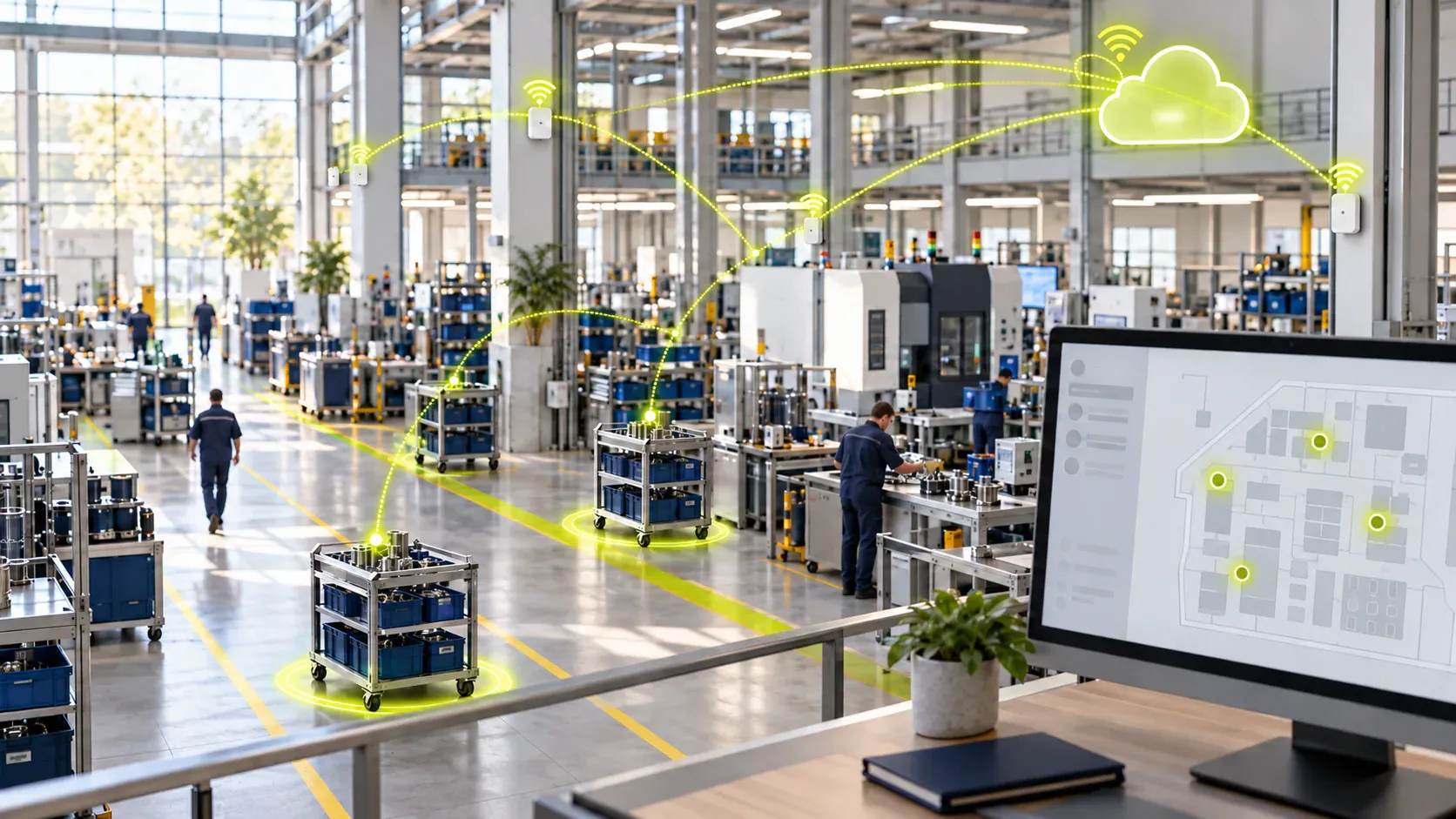
Most real-time location projects are assembled, not built: hardware from one vendor, software from another, integration from a third. Ubudu takes the opposite approach and builds the whole stack in-house, the hybrid anchors and tags, the Location Engine, the applications and the AI, so every layer is designed to work as one system, from the floor to the cloud.
The hidden cost of a stitched-together chain
Best-of-breed sounds sensible on paper: pick the best tag, the best engine and the best dashboard, then wire them together. In practice, the wiring is where projects stall. Every handover between vendors is a seam, a protocol that almost matches, a data format that needs a translator, a firmware update on one side that quietly breaks the other.
Those seams cost you twice. They make the system slower to go live, because someone has to make the pieces agree before anything reaches the floor. And when something breaks months later, you get finger-pointing: the tag supplier blames the software, the software supplier blames the integration, and the operations team is left holding a ticket no single vendor will own. The longer the chain of suppliers, the longer it takes before anyone trusts the data on the screen.
One stack, designed to fit together
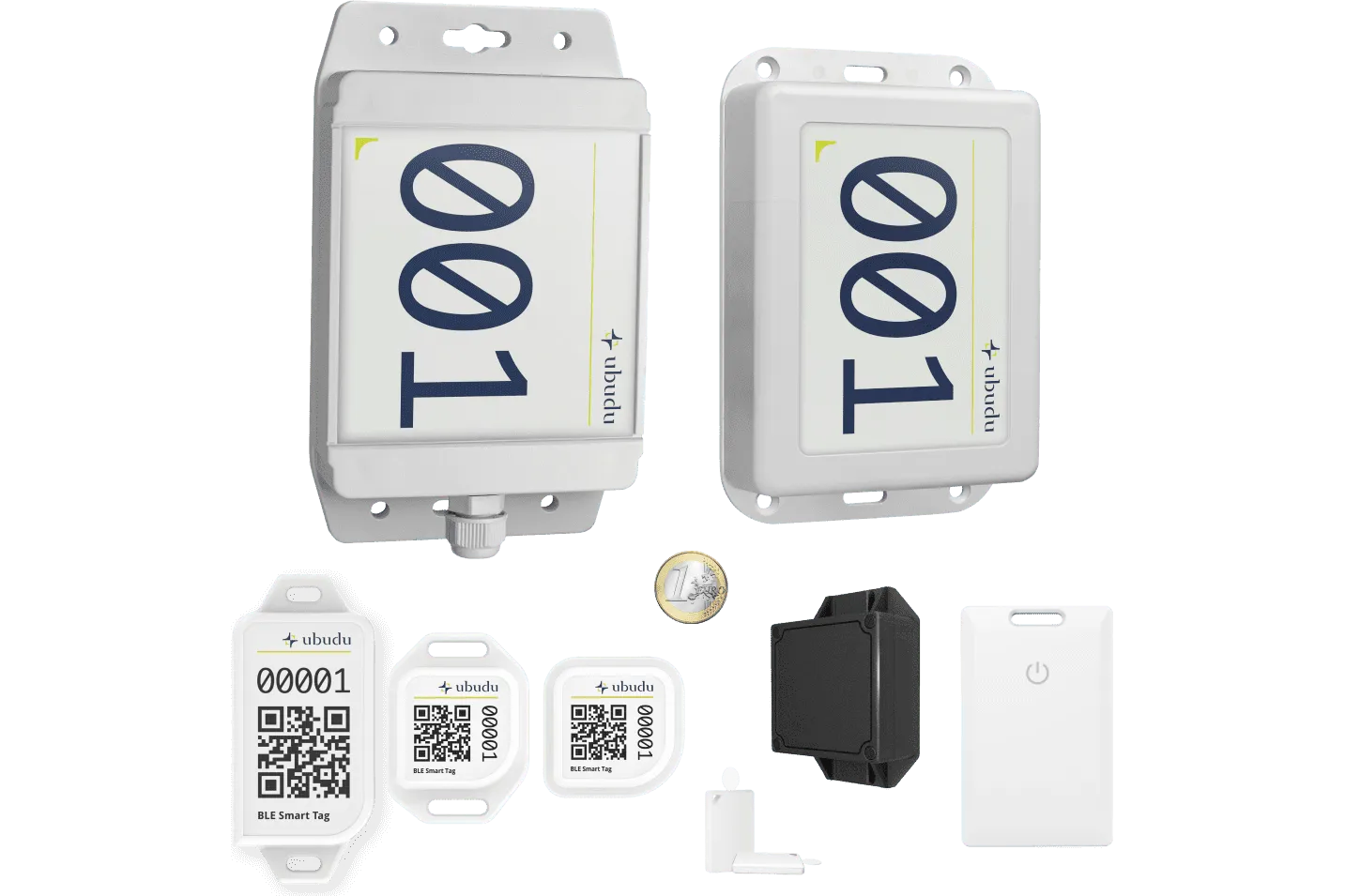
Ubudu develops every layer in-house, so each one is built against the next rather than bolted on afterwards. The same company stands behind the tag clipped to the asset, the engine that locates it and the API that feeds the result into your ERP. There is one data model the whole way through, which is why the parts agree without a translation layer in the middle.
Hybrid hardware
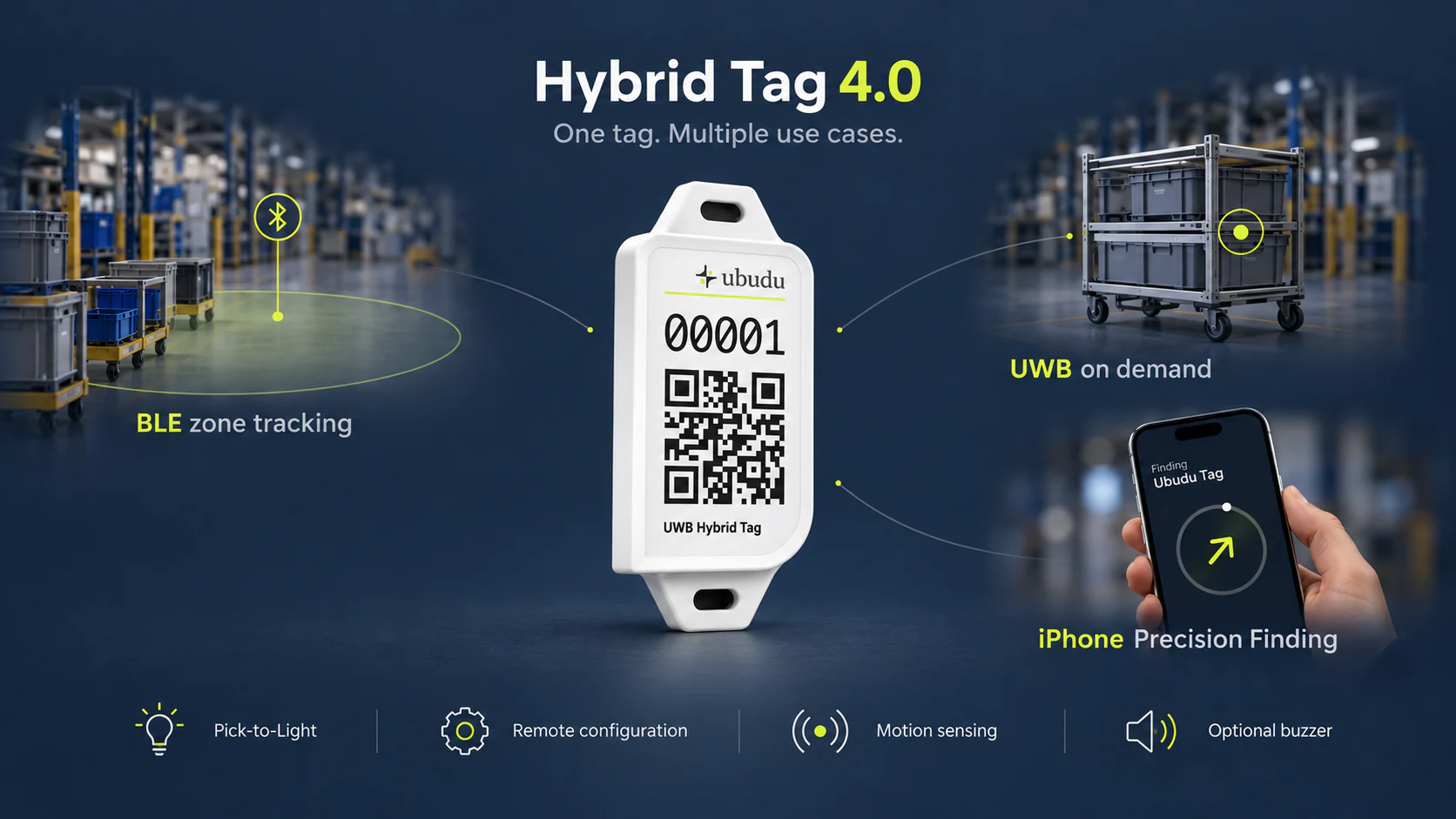
Anchors and tags run UWB and BLE on the same hardware. BLE gives you zone-level coverage at scale, with years of battery life; UWB adds centimetre precision, under 50 cm in a busy industrial environment, under 20 cm in controlled conditions, on the assets and at the moments that need it. For the last few metres, a recent iPhone can walk an operator straight to a tag with Precision Finding. Where it helps, Ubudu also supports compatible third-party devices, so you are not locked out of hardware you already own.
The Location Engine
The engine turns raw radio signals into accurate positions through sensor fusion and map-matching, across technologies and at scale. A single engine is load-tested to 3,000 tags, 6,000 anchors and 600 maps, enough headroom to start on one line and grow across a whole site without re-architecting. Because it was built for the same tags and anchors it reads from, there is no guesswork about how a signal should be interpreted.
The applications
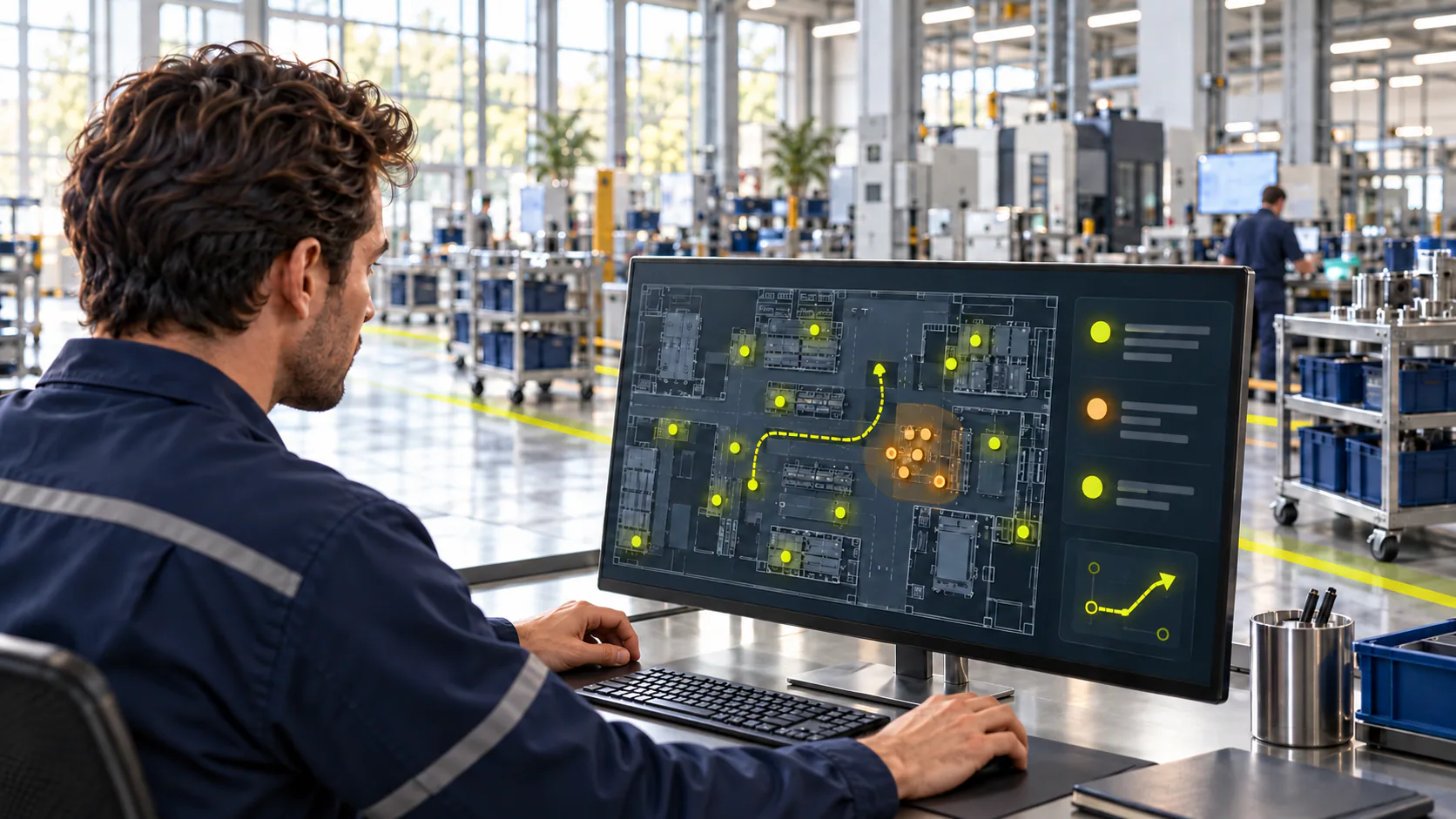
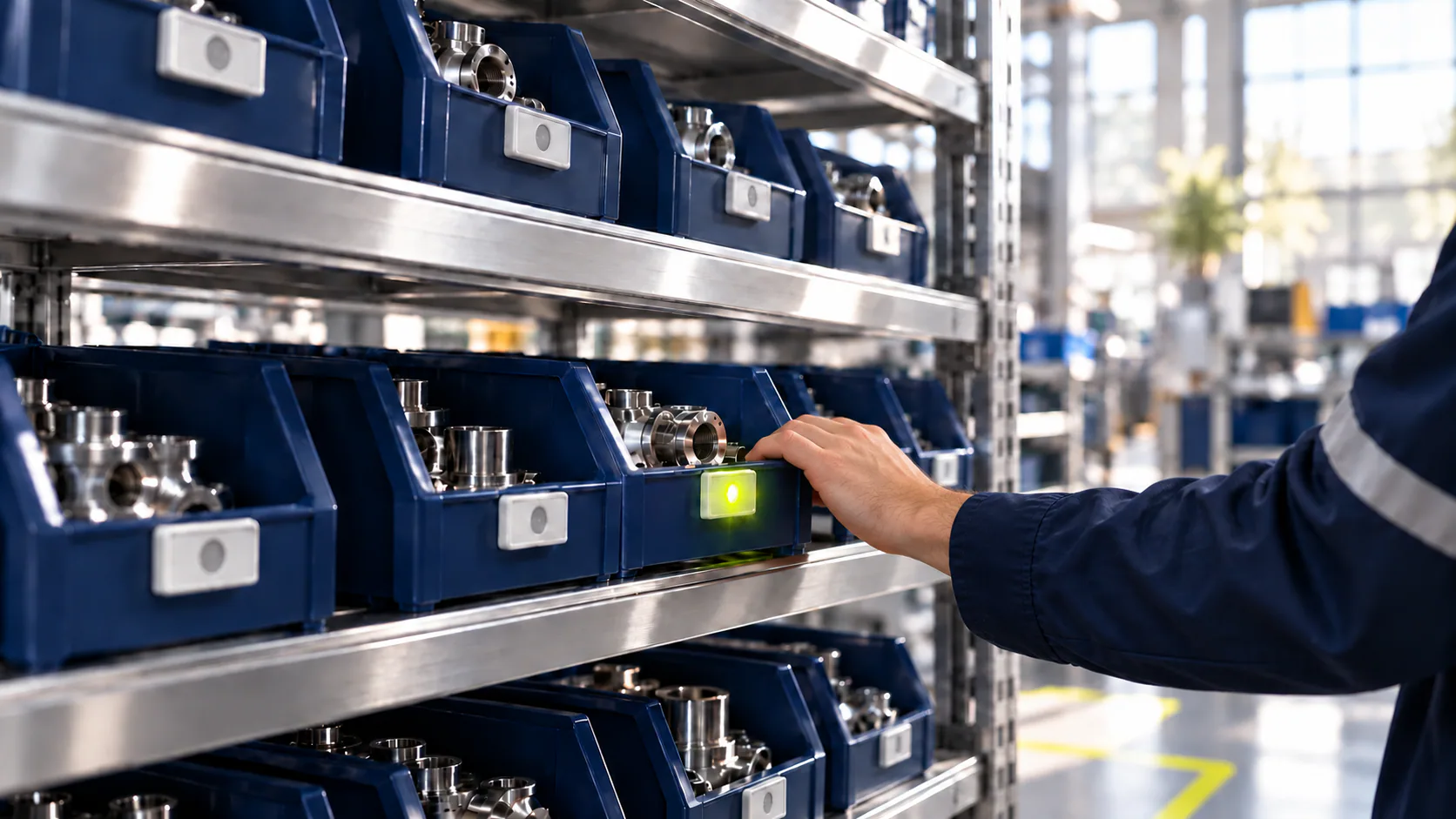
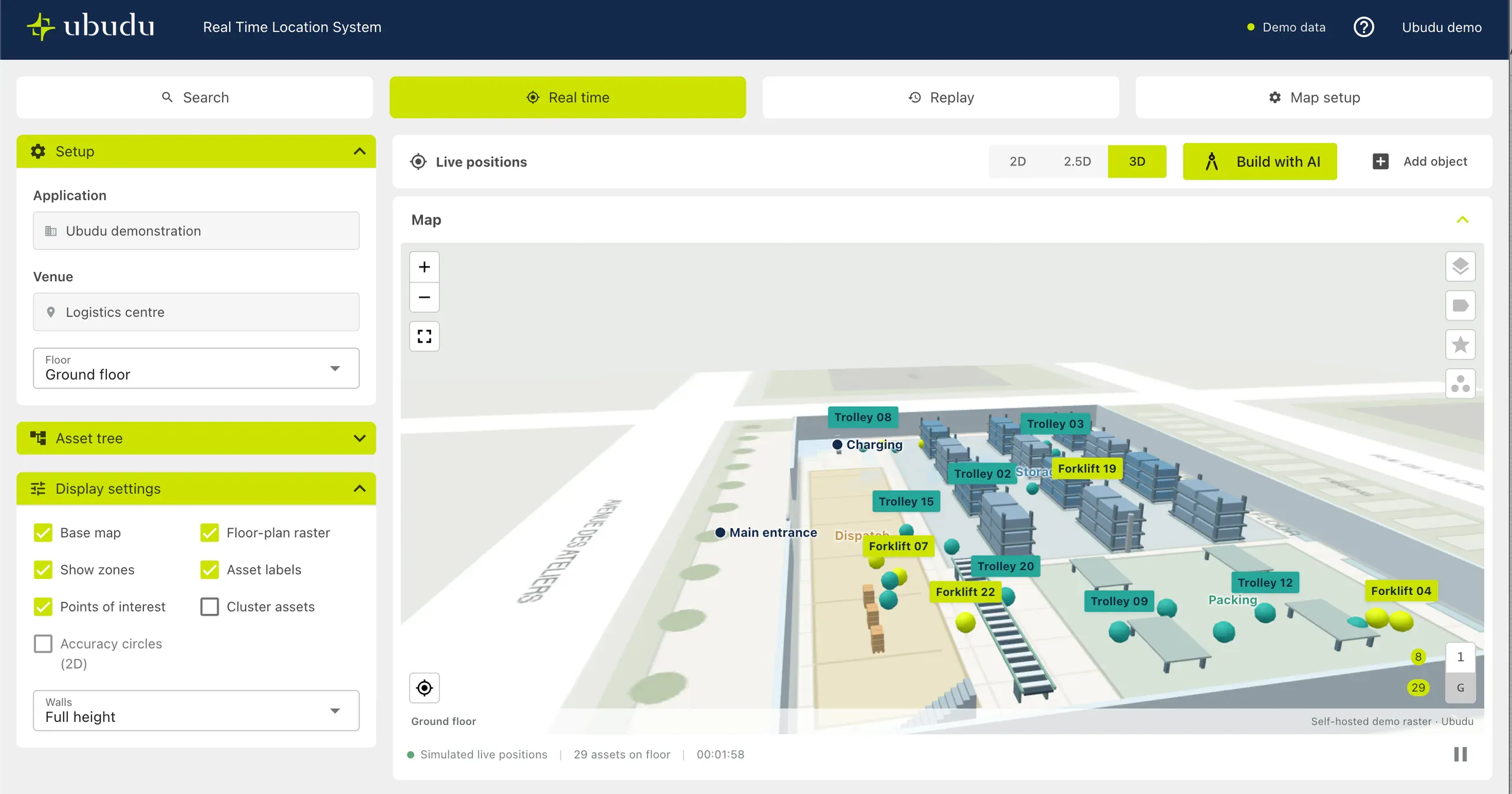
Live maps, zones, rules, replay and analytics give operations a picture they can act on, day to day, with floor features like Pick-to-Light that turn a position into an instruction an operator can follow. Because the apps read straight from the engine, what you see on screen is what the system actually knows: no export, no overnight sync, no second version of the truth.
Into your own systems
Location only pays off when it reaches the systems that run your business. Ubudu feeds your ERP, MES or WMS over an open REST API, WebSocket, MQTT and webhooks, so a position can trigger a work order, update stock or raise an alert without a person retyping anything. Run it in your own data centre or in Ubudu’s GDPR-compliant European cloud; from the floor to the cloud, it is the same architecture either way.
When one company builds every layer, there are no seams to integrate and no suppliers left pointing at each other.
What it means on the floor
End-to-end changes how a deployment behaves over time. You install the anchors once and extend later, more zones, more BLE assets, Pick-to-Light on a new line, without re-cabling the building or standing up a second system beside the first. The hardware you fix to the ceiling on day one is the same hardware your next use case runs on, which is what makes “start small, grow later” a real plan rather than a slogan.
It also changes who you call. One platform to learn, one support line, one roadmap, not a spreadsheet of vendors and version numbers to reconcile every time something changes. It is the approach behind more than 6,000 deployments across 35+ countries: Queen Elizabeth Hospital in Hong Kong, where staff locate stretchers faster; Paris Saint-Joseph, with 1,500+ pieces of equipment located and patients guided to their appointments; Schneider Electric’s SETBT plant, with live work-order visibility through production. Different floors, different use cases, one system underneath.
In short
- One vendor, one system: hybrid anchors and tags, Location Engine, apps and AI, all built to fit.
- Fewer seams, faster to live: no protocol translation between suppliers, and a single point of accountability when you need help.
- Floor to cloud, your way: REST, WebSocket, MQTT and webhooks into your systems, on-premise or in the European cloud.
- Deploy once, extend later: add zones, BLE assets or Pick-to-Light without re-cabling or standing up a second system.
More innovations