5 min
Pick-to-Light: make the tag blink, and find any asset at a glance
Knowing an asset is somewhere on a shelf still means searching. Pick-to-Light triggers the tag's own LED from the software, so an operator can spot the exact item at a glance, even in a crowded rack.
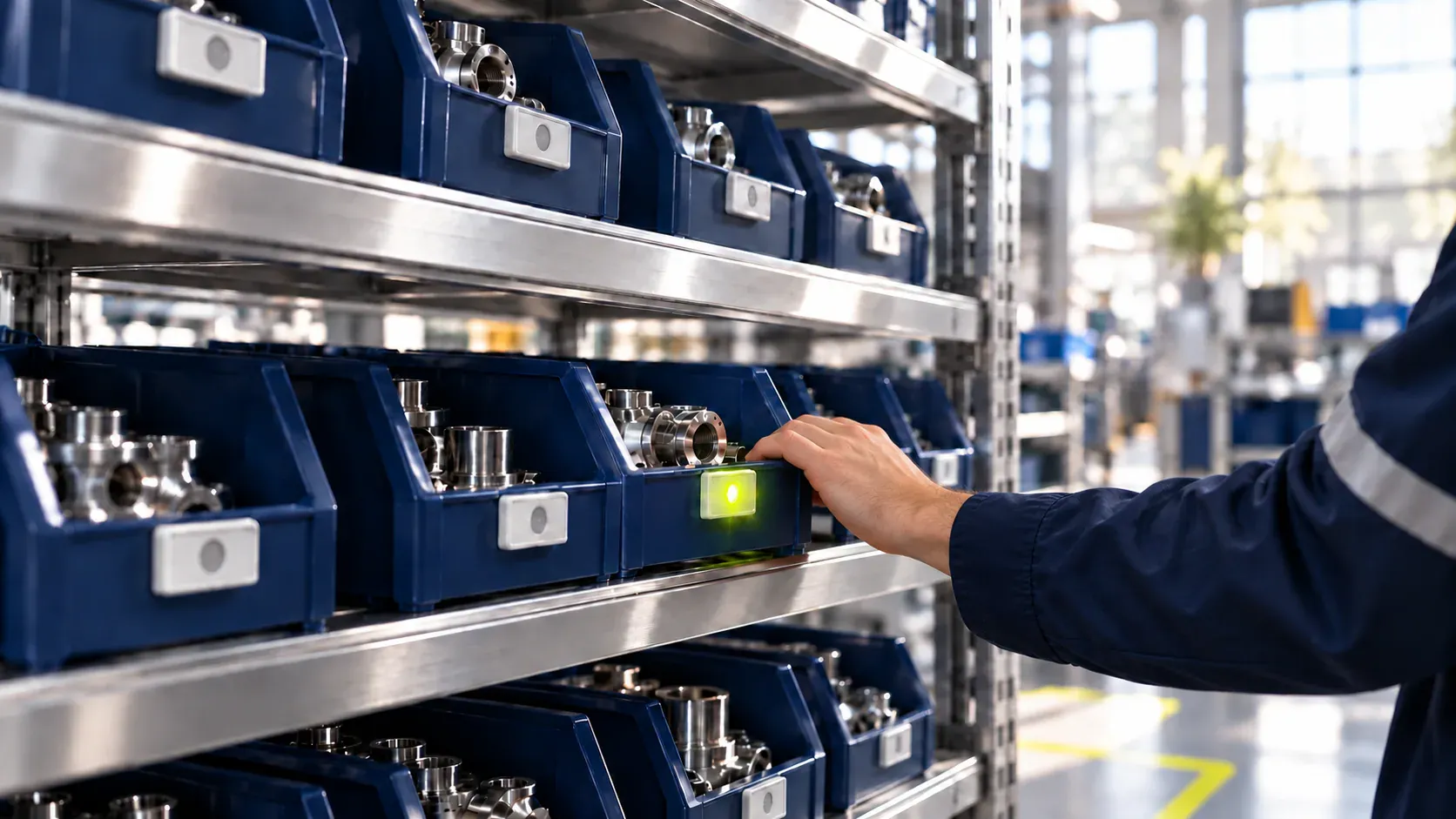
Knowing an asset is “somewhere on this shelf” still means searching. Pick-to-Light triggers the tag’s own LED from the software, so an operator spots the exact item at a glance, even in a crowded rack.
The search no one budgets for
A real-time location system can tell you an asset is in a given zone, or pin it to a few centimetres. That is the hard part solved, on the map. On the floor, a person still has to walk to the rack and find the one item that matters among dozens that look identical.
So they read labels. They double-check the reference. They pull the wrong tote, put it back, and try the next one. When nothing stands out, they walk back to a screen to be sure. None of that moves a single asset anywhere useful, it is pure search time, repeated again and again, and every repetition is a chance to pick the wrong thing. A mis-pick rarely stops at the rack, either: it travels downstream as a wrong part fitted, a re-pick, or a return.
That last stretch, from “the system knows where it is” to “the right item is in my hand”, is where location projects quietly lose their payback.
Blink the exact tag
Pick-to-Light closes that gap. From the Ubudu software, you trigger the LED on the specific asset’s tag. The tag blinks. The operator looks up, sees it, and walks straight to it, no scanning, no cross-checking a reference, no guesswork, even on a full shelf or a crowded staging area.
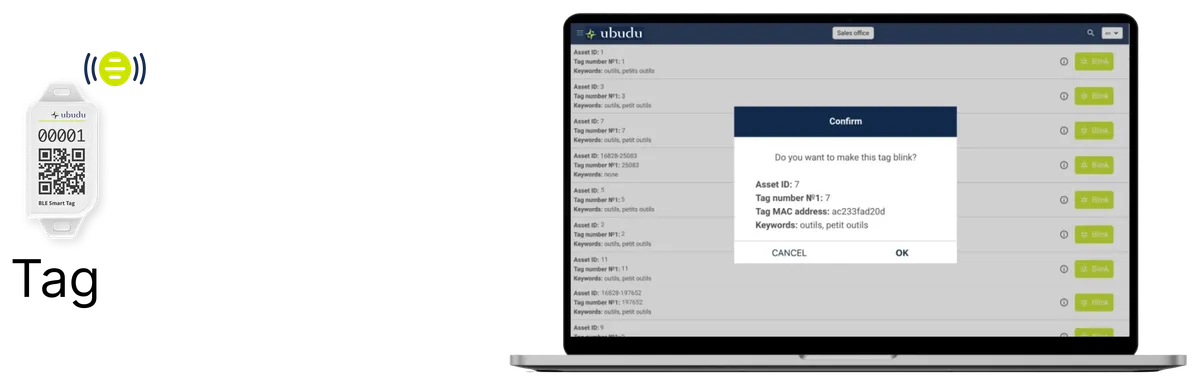
Because the light is on the asset itself, there is nothing to read and nothing to interpret. The operator picks the right one first time, then moves on. It is the difference between “it’s on aisle 12, bay 4, somewhere around shoulder height” and “it’s the one that’s flashing”.
No extra hardware
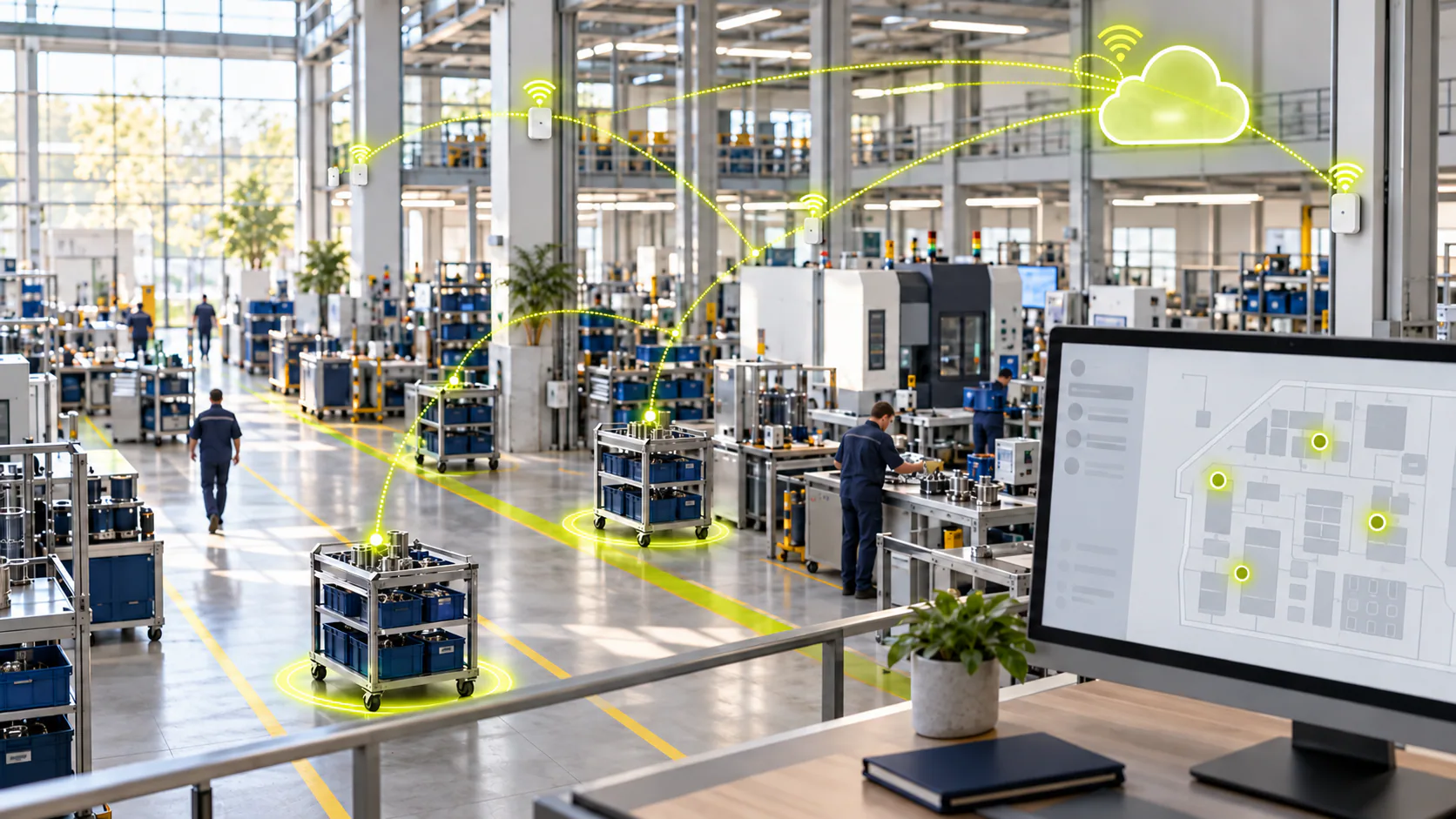
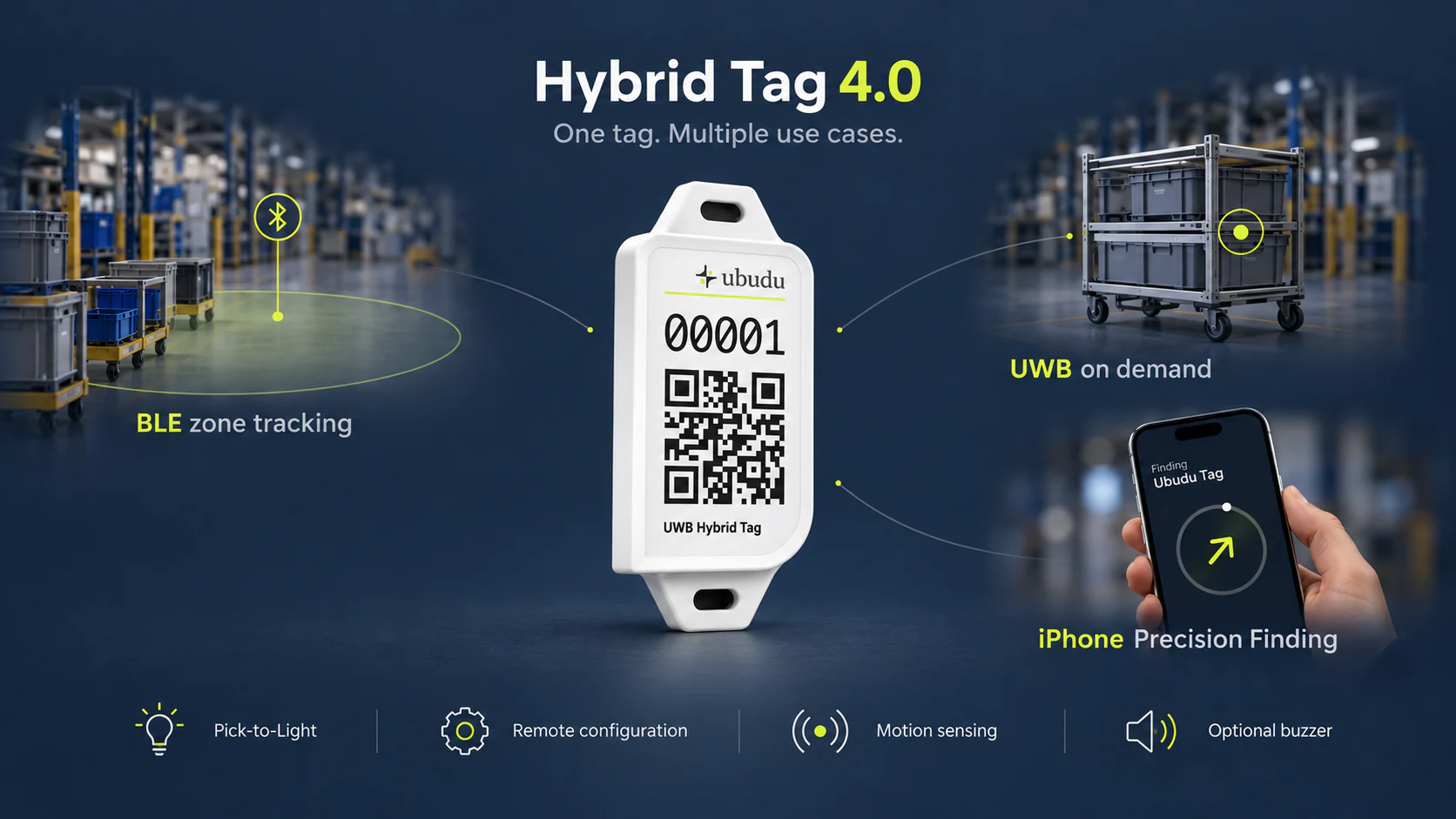
Pick-to-Light runs on the same tags and the same anchors that already locate your assets, the hybrid UWB and BLE platform you deployed for tracking. There is no light strip to wire to a shelf, no second system to install and no fixed fitting that ties the feature to one rack. Move the asset and its light moves with it.
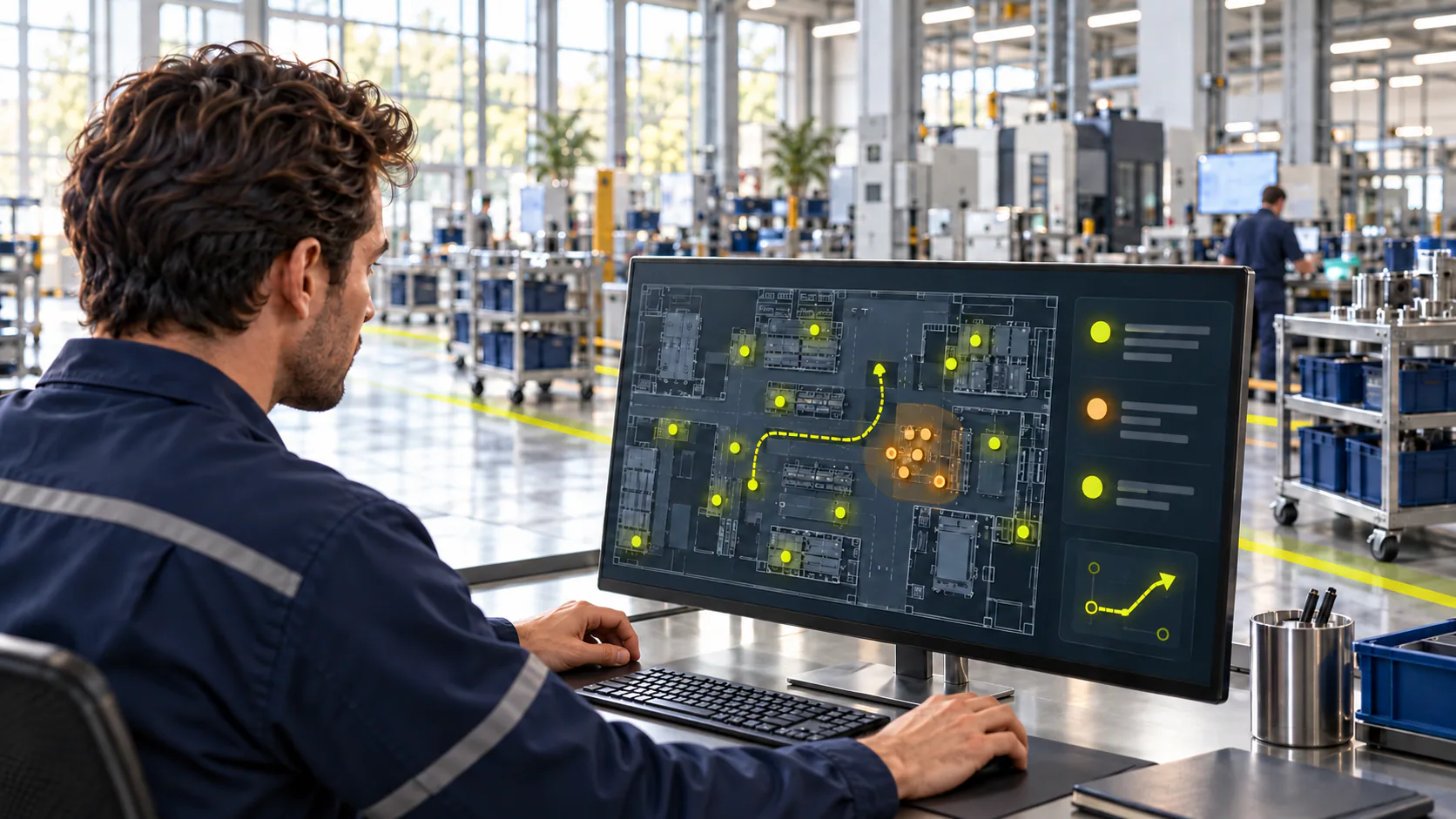
You trigger a blink straight from the tag fleet view, or let another system do it over the platform’s REST, WebSocket, MQTT or webhook interfaces. Whether you run on-premise or in Ubudu’s GDPR-compliant European cloud, the light is one more thing the tag you already own can do.
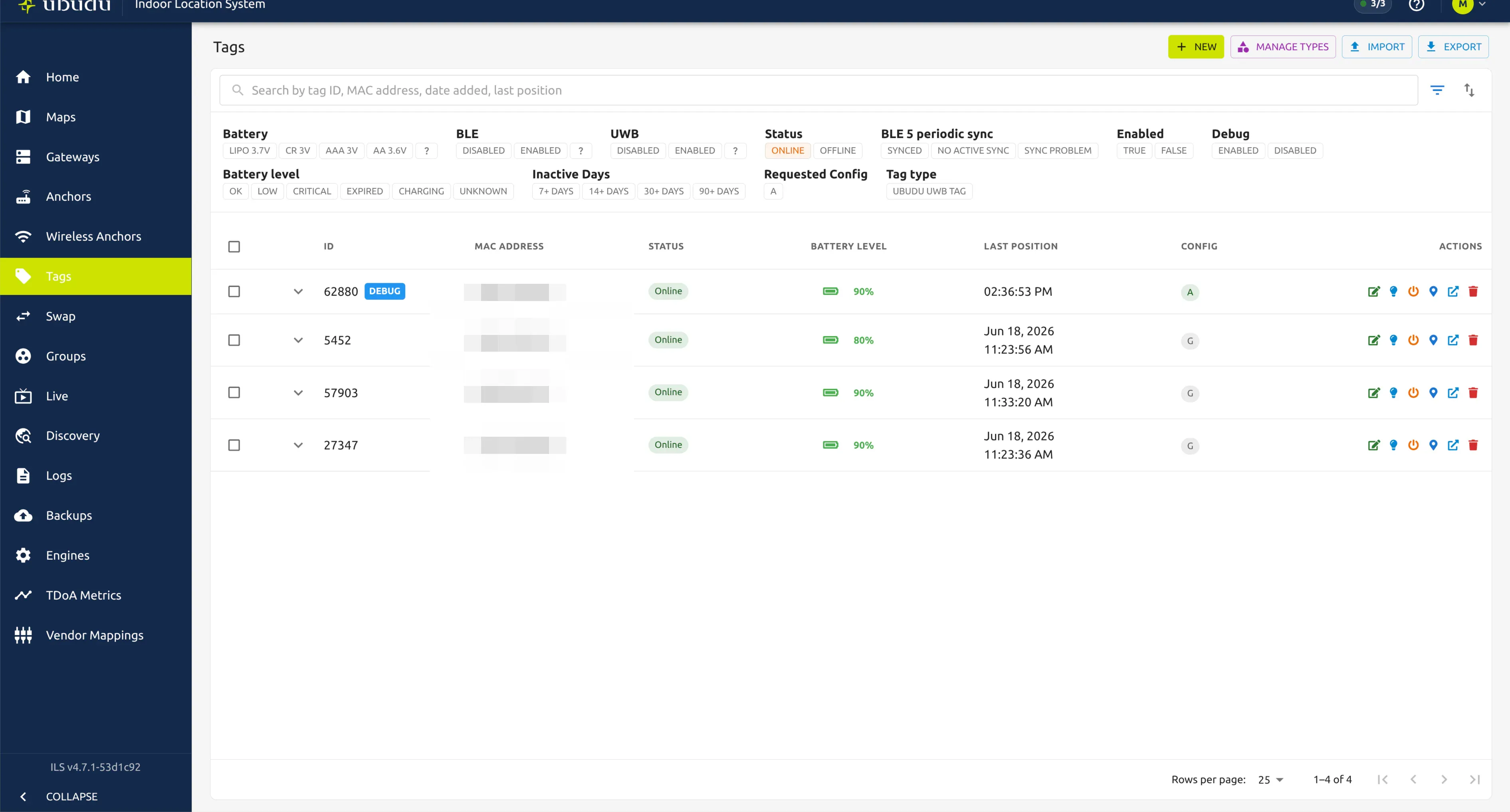
The right item is the one that’s flashing, no label to read, no reference to double-check.
Where it earns its place
- Picking the right work order, tote or kit from a dense rack.
- Finding a specific tool or instrument among identical ones.
- Confirming you have the exact asset before you move it.
- Guiding a new starter who does not yet know the layout by heart.
Part of a bigger loop
Blinking a tag is not only something a person asks for, it is an action the platform can take on its own. When a Spatial AI agent flags an asset as misplaced or overdue, it can alert an operator and light the tag at the same moment. The fix is not a notification buried in a queue; it is a light turning on at exactly the right place. Location that acts, not just shows.
What it means on the floor
Pick-to-Light takes the slowest, most error-prone part of a task and makes it a glance. Picking gets faster because the search disappears. Errors drop because the operator is guided to one tag, not a shelf of lookalikes. Training gets shorter because “follow the light” needs no map in anyone’s head, useful on sites with high turnover or temporary staff. On a busy pick face that is time saved on every line, and lines add up fast.
At one site, the illustrative saving from cutting that search time reached up to around 2,500 hours a year. Treat that as what the approach can be worth, not a promise, the figure depends entirely on how often people search and how much they pick.
It builds on the same hybrid platform Ubudu runs on more than 6,000 sites across 35+ countries, with over a million devices in the field. The teams that locate equipment with Ubudu, Paris Saint-Joseph Hospital tracking 1,500+ pieces of kit, Schneider Electric’s SETBT plant with live work-order visibility, Queen Elizabeth Hospital in Hong Kong getting staff to stretchers faster, are all working the same last few metres Pick-to-Light is built for.
In short
- The last few metres are the hard part: RTLS finds the zone; a person still has to find the item.
- Blink to find: trigger the tag’s own LED from the software and the operator spots it at a glance, no scanning.
- No extra hardware: it runs on the tags and anchors you already deployed, triggered over REST, WebSocket, MQTT or webhooks.
- Faster, fewer errors, less training: the search disappears, and “follow the light” needs no map in anyone’s head.
More innovations