
RTLS for Healthcare
Find equipment, keep patients safe and guide visitors, on one hybrid UWB and BLE installation.
- real-time UWB accuracy in industrial sites
- < 50 cm
- one Hybrid Tag 4.0: BLE, UWB & Precision Finding
- 3 modes
- self-install and go live
- In days
- deployments worldwide, across 35+ countries
- 6,000+
Benefits
Key benefits of Ubudu RTLS in healthcare
Improve efficiency
through a reduction of 60-80% of the time spent searching for equipment
Guarantee higher quality
of services provided to patients by reducing waiting times
Reduce expenditures
by sharing equipment between services
Gain more visibility
on patients that need special attention for improved safety
Overview
Hybrid RTLS for hospitals and clinics
Ubudu anchors combine UWB, where a position must be precise, with BLE for zone-level presence everywhere else. The Location Engine merges both into one live map of people and equipment.
Start with equipment tracking and add patient safety or wayfinding later, without re-cabling or a second system. Positions feed alerts, dashboards and your hospital systems, on your own servers or in our GDPR-compliant European cloud.
Equipment tracking
Track the location of equipment
Locate medical and non-medical equipment on every floor and in every service, so staff stop searching and nothing leaves unnoticed.
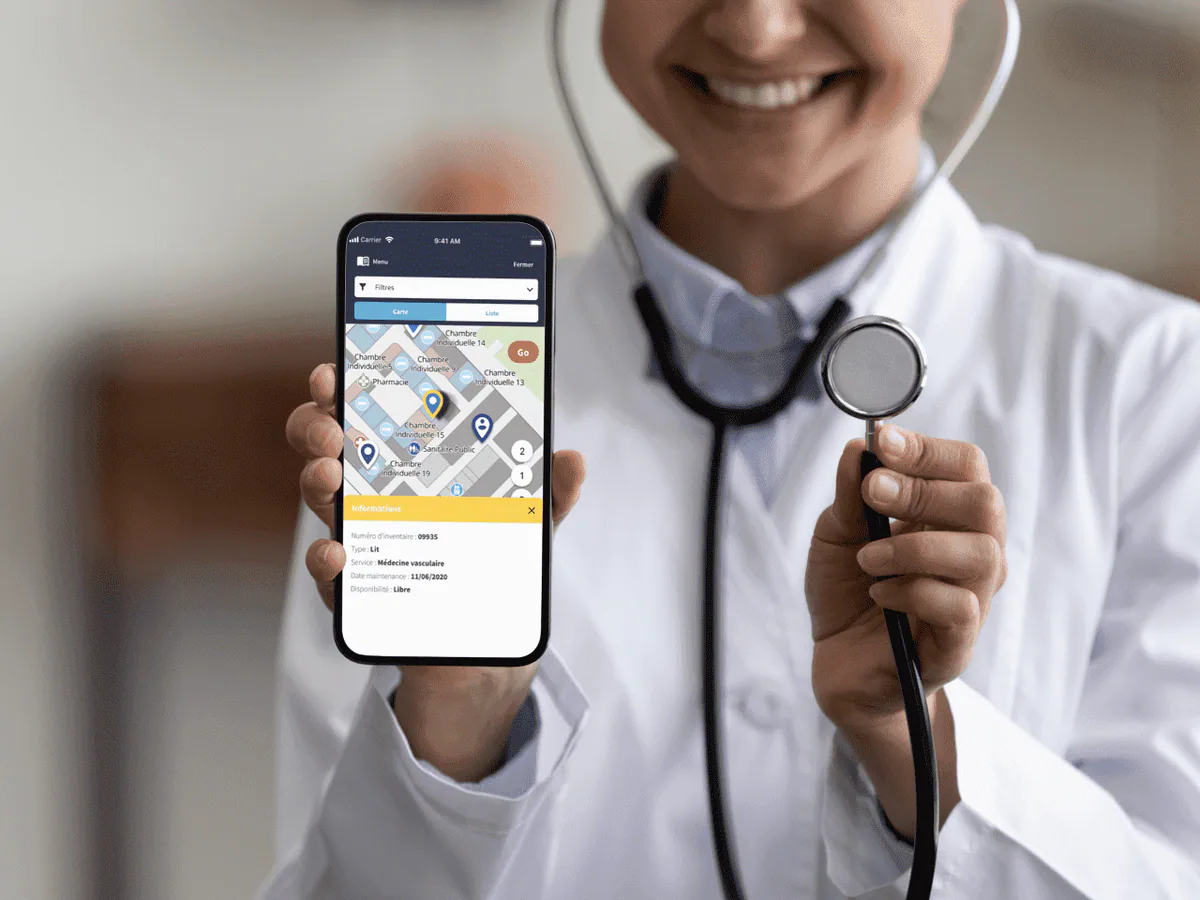
Find equipment from the RTLS app: here a bed located on the ward map, with its inventory details. 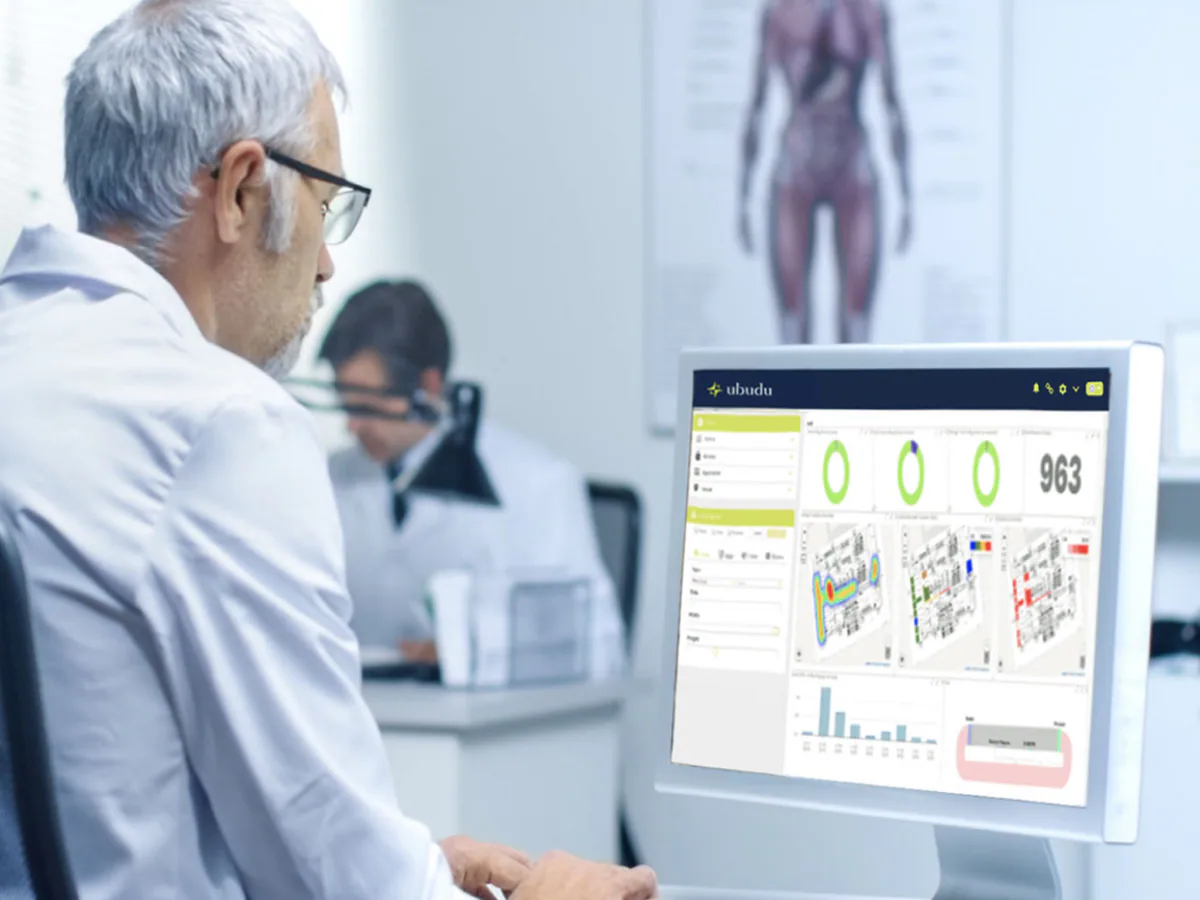
Monitor utilisation across services on the RTLS dashboard, with floor-plan heat-maps.
Reduce staff stress and avoid delays
Nurses and stretcher-bearers find the equipment or stretcher they need on the live map. On tags with an LED, Pick-to-Light makes it blink in a crowded storeroom.
Optimise utilisation, cut annual spend by 10%
See how equipment is spread and used across services, and give each department the right number instead of buying more.
Ensure equipment maintenance is done on time
Biomedical technicians find the devices due for service straight from the map, so maintenance stays on schedule.
Avoid losing equipment, improve asset management
Get an alert by email or webhook when equipment leaves the hospital or stays in one place too long.
Patient management
Streamline patient management
Follow patients through their treatment to plan resources, cut waiting times and tell families when discharge is near.
Allocate resources by patient status
See where each patient is in their treatment, anticipate the resources needed next and spot delays as they happen.
Reduce patient waiting times
Measure waiting times between examinations and find what makes them longer.
Automatic updates to families
A geofence detects when a patient reaches the last step of treatment and notifies family or friends of the discharge time.
Protect against wandering & elopement
An alert goes out as soon as a patient or a baby leaves a restricted area, so staff can respond before an unauthorised exit.
Wayfinding
Patient orientation & experience
Indoor navigation guides patients and visitors through the hospital, so fewer arrive late or get lost.
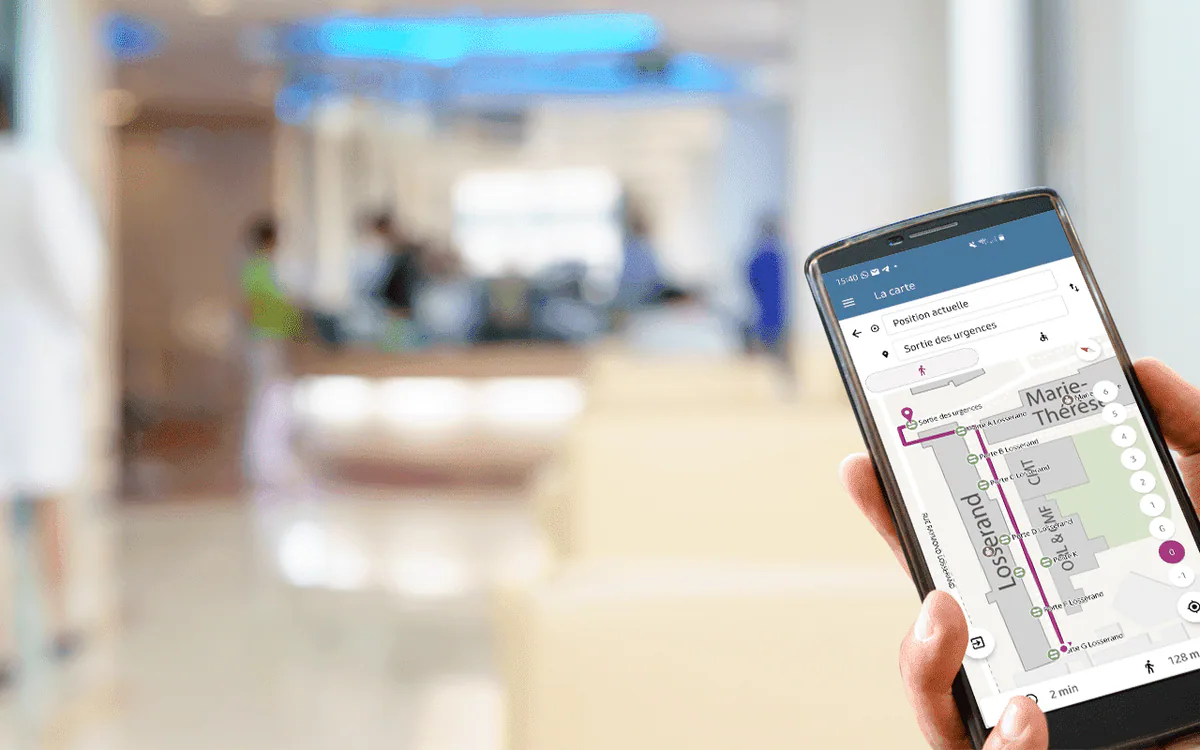
Reduce late arrivals to consultations
Directions follow the patient's live position on their smartphone, all the way to the consultation room.
Enhance the visitor experience
Visitors find wards, services and exits without asking the way.
Tag size & battery?
From wristbands and small tags for syringe pumps to larger tags for beds and wheelchairs. The battery lasts 1 to 4 years, depending on the tag and its settings.
Leverage my Wi-Fi?
Yes, if your Wi-Fi access points have Bluetooth built in: they can locate BLE tags and cut cabling. Add UWB anchors only where precision is needed.
One infrastructure, several use cases?
Yes. Equipment, patients and visitors are located by the same anchors and software, so you buy and maintain one RTLS, not one per use case.
Integrate with our CMMS?
Yes. The open API (REST, WebSocket, MQTT, webhooks) sends live and historical positions to your CMMS and other hospital systems. If your CMMS has an open API, its equipment details can also appear in the Ubudu apps.
Trusted by healthcare teams


Start with a pilot ward.
Tell us which service to start with, and our team scopes the pilot with you.