5 min
The Hybrid Tag 4.0: one tag, multiple use cases
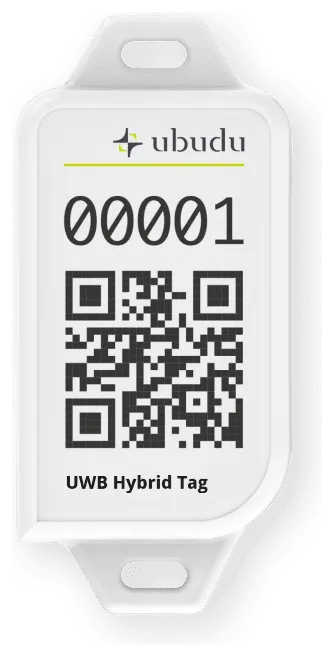
The Ubudu Hybrid Tag 4.0 runs on BLE for years of battery, switches on UWB for centimetre precision only when you need it, and supports iPhone Precision Finding, so one device covers zone tracking, high-accuracy positioning and walk-to-it finding, with Pick-to-Light, remote configuration and motion sensing built in.
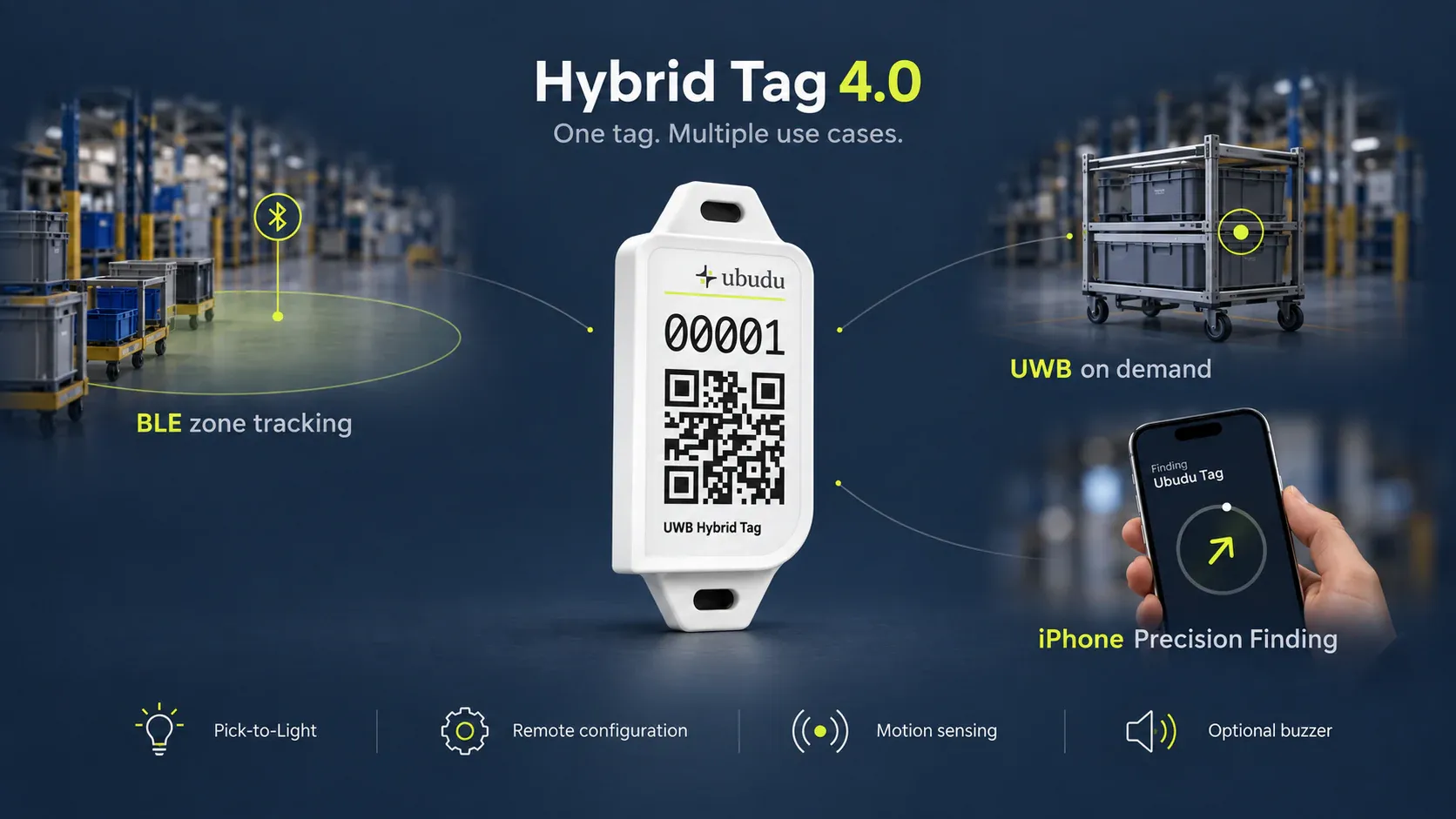
The Ubudu Hybrid Tag 4.0 runs on BLE for years of battery, switches on UWB for centimetre precision only when you need it, and supports iPhone Precision Finding, so one device covers zone tracking, high-accuracy positioning and walk-to-it finding.
Why one tag instead of three
Most real-time location projects start with a trade-off. Bluetooth Low Energy is cheap and sips power, so it is perfect for knowing which zone an asset is in, but it will not tell you which of two machines a trolley is parked at. Ultra-Wideband gives you centimetre precision, but historically at a higher power and hardware cost that is hard to justify across a whole fleet. Pick one and you either lose precision where it matters or pay for it everywhere it doesn’t.
The Hybrid Tag 4.0 removes the choice. A single device runs all three modes, so you deploy once and dial precision up or down per asset and per moment, no second network, no second tag to buy, install and maintain.
Mode 1 · BLE, always on
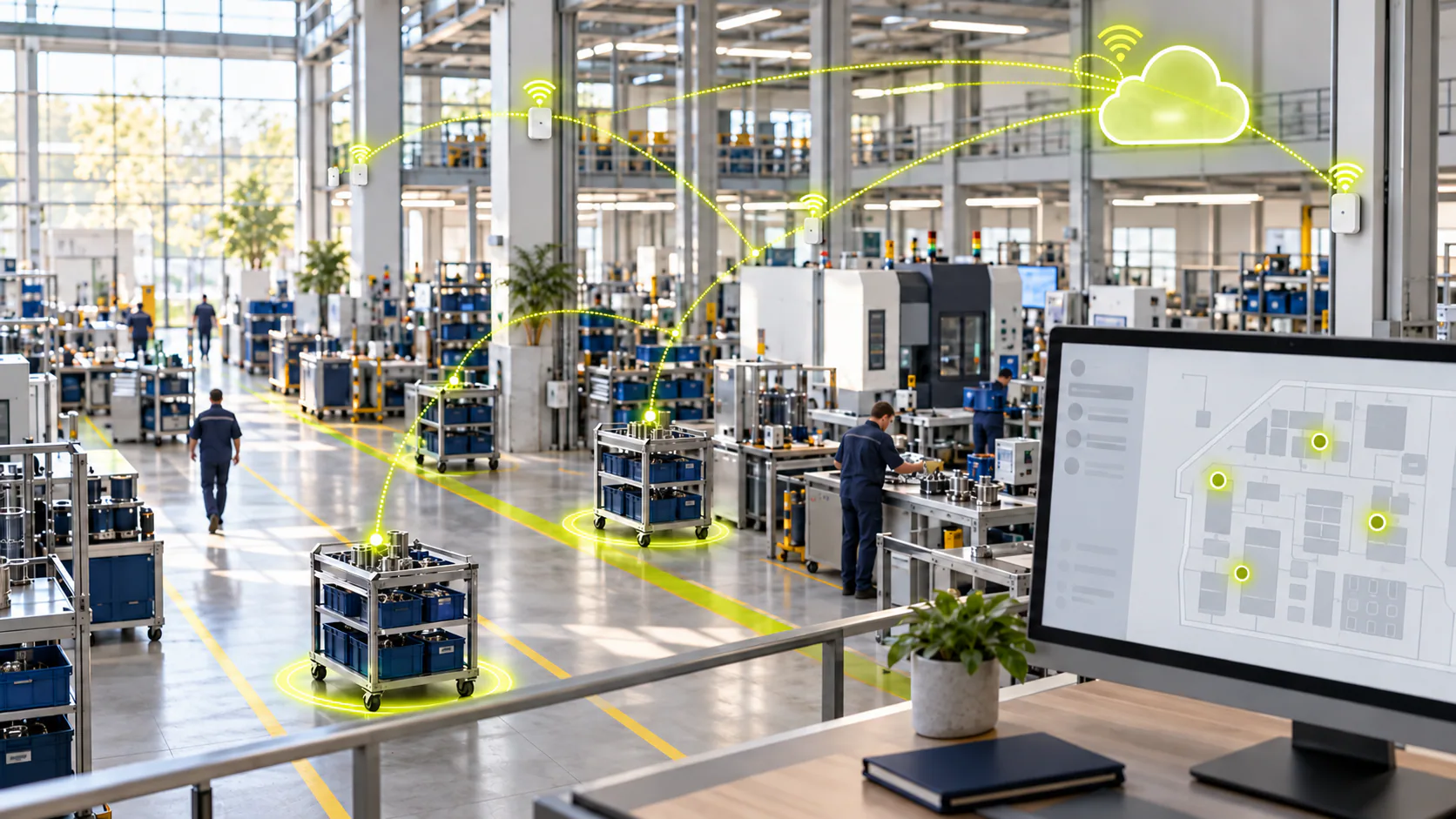
By default the tag advertises over Bluetooth Low Energy for zone-level location at scale, with years of battery life. This is the right mode for most assets most of the time: you know which zone something is in, on one live map, at very low cost. For a large fleet of trolleys, bins, tools or stock, that alone is often the whole project.
Mode 2 · UWB, on demand
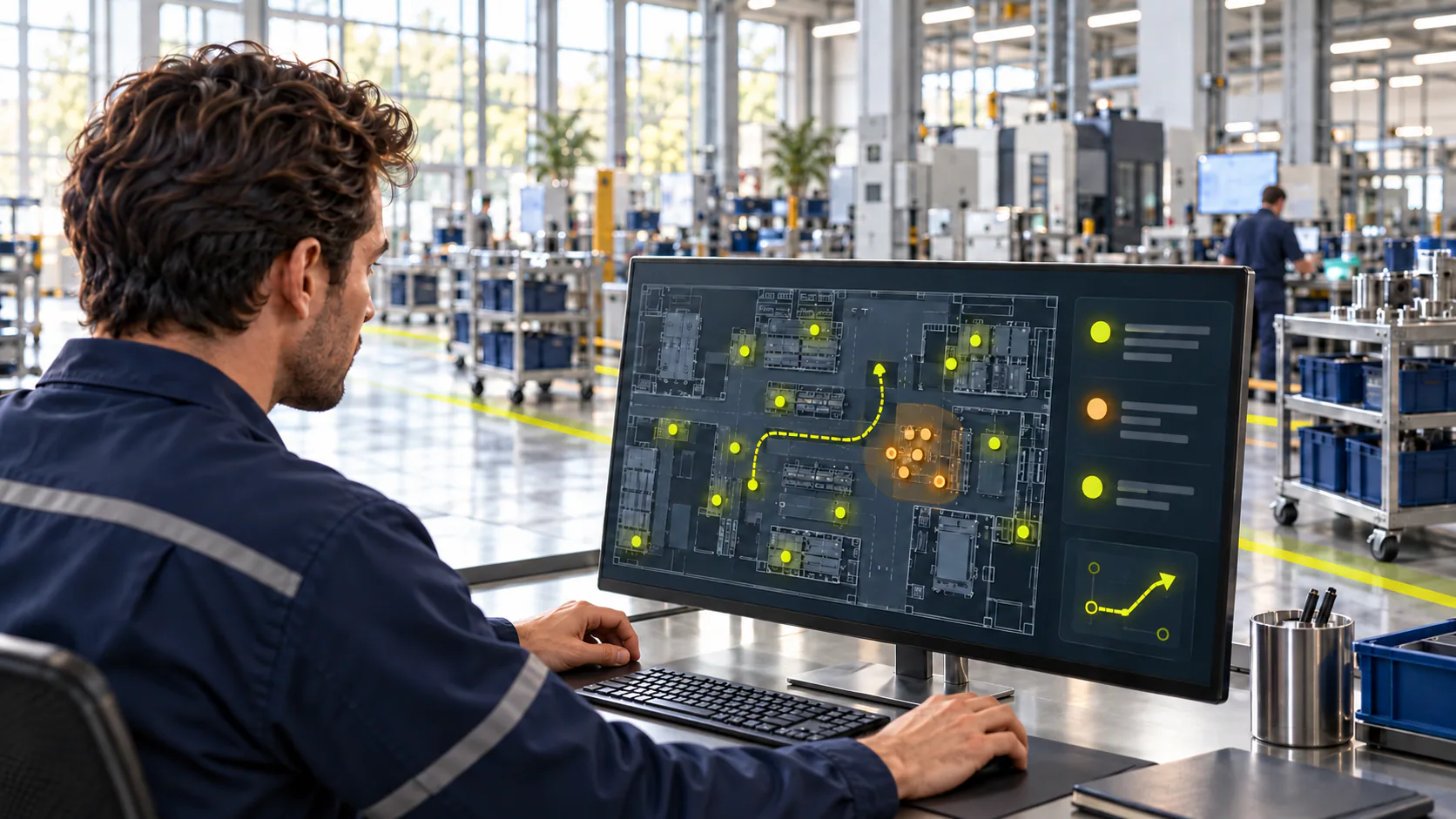
When an asset needs real precision, the tag switches on Ultra-Wideband and is located to under 50 cm in a busy industrial environment, and under 20 cm in controlled conditions. Because UWB runs only when it is needed, on the assets that matter, at the moments that matter, you get that precision without paying for it in battery life across the whole fleet.
Mode 3 · Precision Finding on an iPhone
For the last few metres, an operator with a recent iPhone uses Precision Finding to walk straight to the tag: direction and distance on screen, down to around 10 cm. It is the experience people already know from consumer trackers, built for industrial assets, no training required.
One tag, three modes: zone coverage everywhere, centimetre precision exactly where and when you ask for it.
Built for the floor, not just for location
The Hybrid Tag 4.0 does more than report where something is:
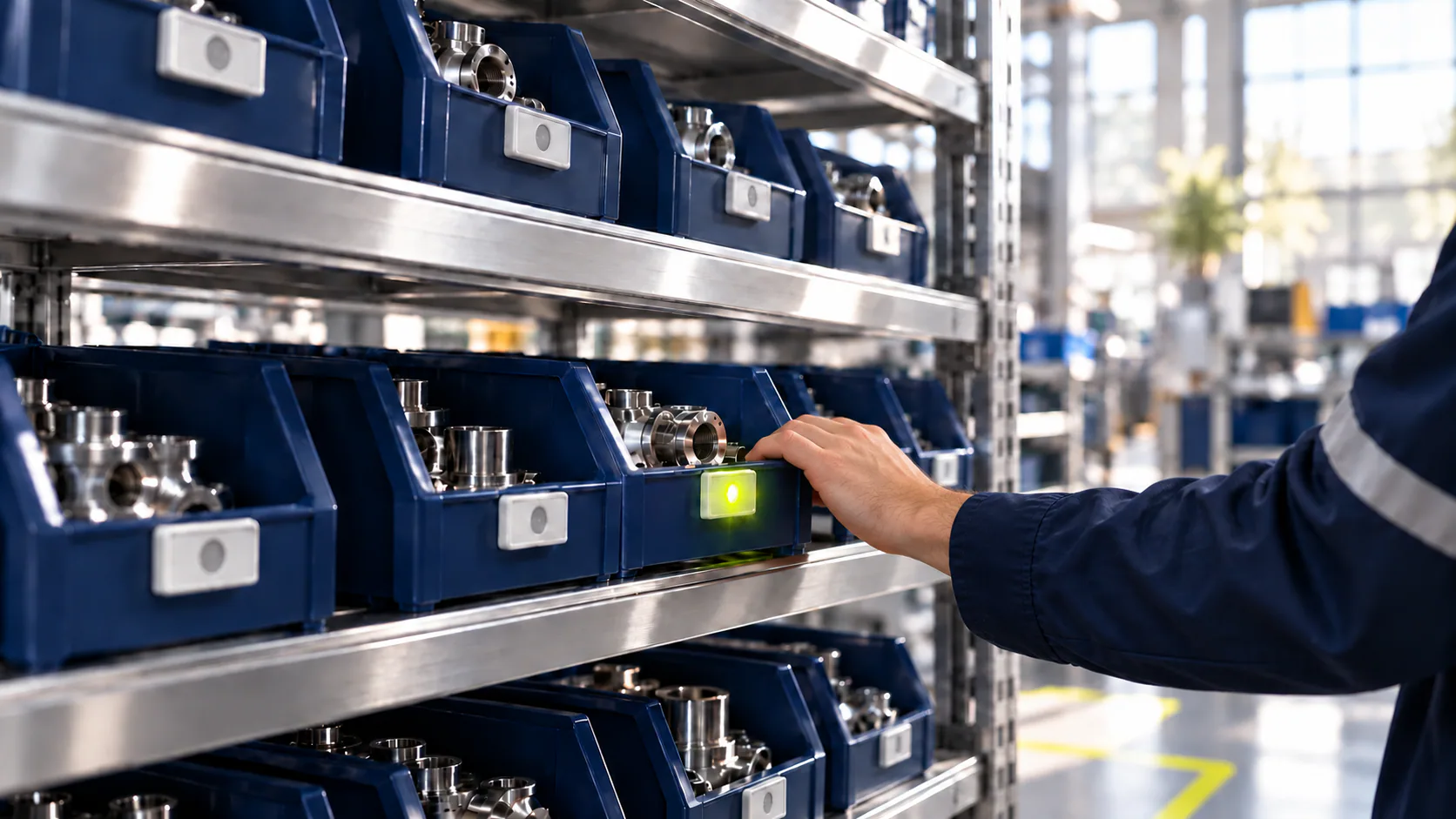
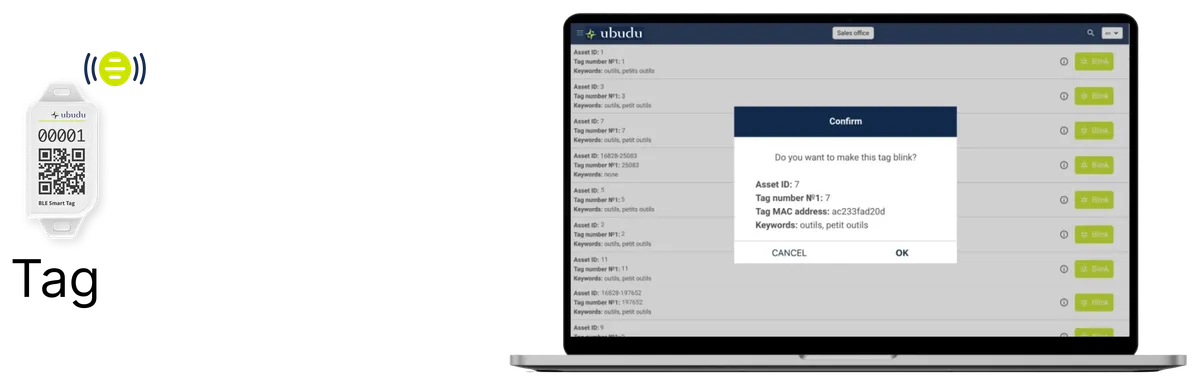
- Pick-to-Light: blink the right tag from the software so an operator walks straight to it, even on a crowded rack.
- Remote configuration: change ping rate, precision and behaviour over the air, with no handling.
- Motion sensing: the tag reacts to movement, so it reports when it matters and stays quiet when it doesn’t.
- Optional buzzer: add an audible cue to find or flag an asset.
What it means on the floor
One tag instead of three systems changes the economics of a deployment. You tag everything once for zone-level visibility, then switch on precision only for the assets and moments that justify it. There is one device to stock, one network to run and one platform to learn, and the same tag that locates an asset can also light it up or buzz it.
It is the hybrid approach Ubudu runs on more than 6,000 sites across 35+ countries: start with broad, low-cost coverage, then add precision where it pays for itself.
In short
- One device, three modes: BLE zones, UWB precision on demand, iPhone Precision Finding.
- Precision without the battery tax: UWB only when asked; years of battery life on BLE.
- More than a dot on a map: Pick-to-Light, remote configuration, motion sensing and an optional buzzer.
- Deploy once: no second network or second tag to buy, install and maintain.
More innovations